PATMOS: On God and Government: What Evangelicals Can Learn from Pope Leo
C
Caleb Maglaya Galaraga
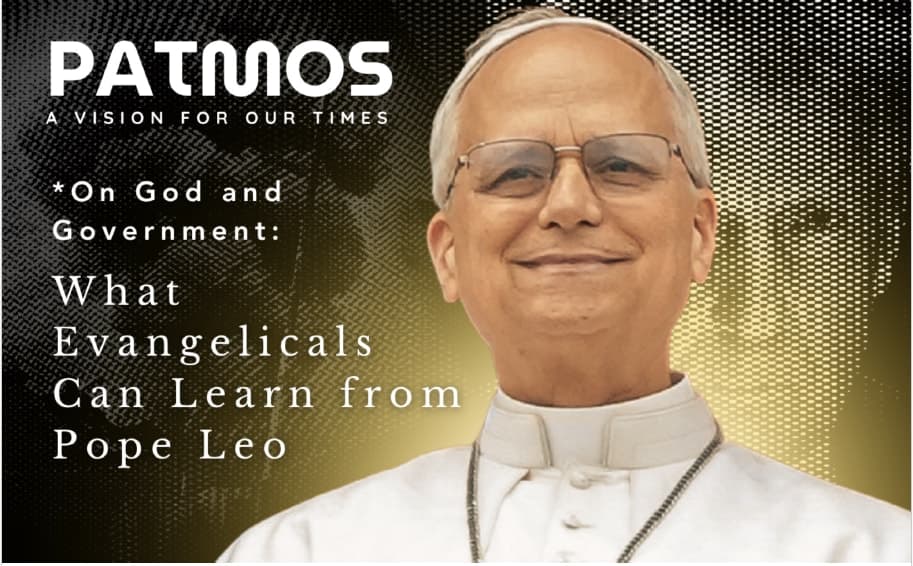
Someone called him passive-aggressive. In his view, he is simply preaching the Gospel.
“I do not look at my role as being political,” said Pope Leo, the first American pontiff, who has been assailed by U.S. President Donald Trump as too liberal and “terrible for foreign policy.”
“I don't want to get into a debate with him. I don't think that the message of the gospel is meant to be abused in the way that some people are doing, and I will continue to speak out loudly against this war, looking to promote peace,” the pope said.
On Feb. 28, the United States, together with Israel, launched a series of airstrikes against Iran, eventually killing Ayatollah Ali Khamenei, the theocratic leader who had played a pivotal role in militarizing the country and oppressing his own people. Earlier this year, an uprising against the Islamic regime drew worldwide attention, with human rights groups saying that at least 7,000 anti-government protesters had been killed and 50,000 taken into custody.
The Iranian government’s suppression of dissent, along with the decades-long fear that it could soon acquire a nuclear weapon, became part of the Trump administration’s rationale for the attack. The military action drew widespread criticism, foremost because it lacked congressional authorization typically expected for such policy decisions.
From the onset, the leader of the billion-strong Roman Catholic Church has opposed what he described as the “madness of war.” The pontiff’s fidelity to gospel values—evidenced in his public statements—has drawn the ire of President Trump and his loyalists.
In more than one message, the pope emphasized the Prophet Isaiah’s description of the Son of God as the Prince of Peace, saying: “Anyone who is a disciple of Christ, the Prince of Peace, is never on the side of those who once wielded the sword and today drop bombs.”
Without mentioning Trump or any other world leader by name, he appealed to those with influence to “sit at the table of dialogue and mediation, not at the table where rearmament is planned.”
Though repeatedly assailed by the U.S. president, most recently on May 5th, the pope is unperturbed and has made it clear he is not fearful of the Trump administration.
It is possibly because his stance against destruction and conflict is rooted not in self-interest or even national security concerns, but in the teachings of Jesus, who heralded the power of loving one another and exemplified reconciliation to the world. The pope has believed and preached the gospel all his life, from his priesthood, episcopacy, and now papacy.
The man who led the Augustinian order, whose namesake St. Augustine helped shape the doctrine of just war, persists to appeal for peace, urging people to “search always for peace and reject war.” Last month, when President Trump warned in an incendiary statement that “a whole civilization will die tonight,” referring to the Iranian people, the pope called the rhetoric “truly unacceptable” and sought to refocus attention on the marginalized and vulnerable communities most affected by instability.
“Let's remember, especially, the innocent: children, the elderly, the sick, so many people who have already become, or will become, victims of this continued warfare—and to remind us all that attacks on civilian infrastructure are against international law, and that they are also a sign of the hatred, division, and destruction that the human being is capable of.”
Evangelical Christians, who at times rely on misinterpretations of Romans 13—using it as a cudgel to silence healthy, informed discourse on complex issues—could learn from the pope’s willingness to speak out against injustice.
In modeling Micah 6:8—“to do justice, and to love kindness, and to walk humbly with your God”—the pope has shown moral clarity on issues ranging from economic and climate injustice to immigration enforcement and now a conflict that has claimed the lives of more than 3,000 people in Iran and 13 U.S. service members.
A conflict whose economic consequences have led one jeepney driver to skip lunch because the sudden spike in oil prices has gutted the $5 he earns in a day.
In his pronouncements, which he expresses with calmness, eloquence, and gentleness, the pope affirms the idea that morality cannot be divorced from the injustices that continue to damage human dignity.
“We tend to think that when the Church is talking about morality, that the only issue of morality is sexual, and in reality, I believe there are much greater and more important issues, such as justice, equality, freedom of men and women, freedom of religion, that would all take priority before that particular issue.”
Evangelical Christians’ view of Roman Catholicism is not always rooted in scholarly understanding or empathy. At times, it is fueled by misconceptions. Growing up Pentecostal in the Philippines, I remember hearing testimonies that referred to statues of the Virgin Mary and the saints as “idols,” along with comments suggesting Catholics are not truly Christians or “saved.”
The prevalence of long-debunked dispensationalist ideas—which interpret the Book of Revelation literally and elevate rapture theology as the primary lens for understanding the Second Coming—has also contributed to beliefs that the pope and the Vatican are tools of the coming Antichrist.
Many of us, myself included, foolishly ingrained these ideas into our psyche, even as we mocked liturgy, implied that Catholic religious practices were futile, and repeated the refrain that evangelical Christianity “is not a religion but a relationship.”
So, it is unsurprising that some evangelicals responded to the pope’s stance on the Iran war with dismissal or disdain. Several Southern Baptist influencers—with no formal theological training—smugly suggested that the former leader of the Augustinian order, who holds a doctorate in canon law, is not very adept with Scripture.
If evangelicals can move past their prejudice against Catholics, there is a wealth of wisdom to draw from Pope Leo’s witness and engagement in the public square: his consistency, moral clarity, composure, and commitment to the Scripture. All of these form his public witness as not only a high-profile Christian leader but as a devoted follower of Jesus.
After all, even people of the Resurrection remain in the world and are affected by what takes place within it. We must recognize that the church has
##
Caleb Maglaya Galaraga
is a staff reporter for The Living Church, a publication serving the Episcopal Church and the Anglican Communion since 1878. His work has also appeared in Christianity Today, The Presbyterian Outlook, and the Global Sisters Report, among other outlets.
Someone called him passive-aggressive. In his view, he is simply preaching the Gospel.
“I do not look at my role as being political,” said Pope Leo, the first American pontiff, who has been assailed by U.S. President Donald Trump as too liberal and “terrible for foreign policy.”
“I don't want to get into a debate with him. I don't think that the message of the gospel is meant to be abused in the way that some people are doing, and I will continue to speak out loudly against this war, looking to promote peace,” the pope said.
On Feb. 28, the United States, together with Israel, launched a series of airstrikes against Iran, eventually killing Ayatollah Ali Khamenei, the theocratic leader who had played a pivotal role in militarizing the country and oppressing his own people. Earlier this year, an uprising against the Islamic regime drew worldwide attention, with human rights groups saying that at least 7,000 anti-government protesters had been killed and 50,000 taken into custody.
The Iranian government’s suppression of dissent, along with the decades-long fear that it could soon acquire a nuclear weapon, became part of the Trump administration’s rationale for the attack. The military action drew widespread criticism, foremost because it lacked congressional authorization typically expected for such policy decisions.
From the onset, the leader of the billion-strong Roman Catholic Church has opposed what he described as the “madness of war.” The pontiff’s fidelity to gospel values—evidenced in his public statements—has drawn the ire of President Trump and his loyalists.
In more than one message, the pope emphasized the Prophet Isaiah’s description of the Son of God as the Prince of Peace, saying: “Anyone who is a disciple of Christ, the Prince of Peace, is never on the side of those who once wielded the sword and today drop bombs.”
Without mentioning Trump or any other world leader by name, he appealed to those with influence to “sit at the table of dialogue and mediation, not at the table where rearmament is planned.”
Though repeatedly assailed by the U.S. president, most recently on May 5th, the pope is unperturbed and has made it clear he is not fearful of the Trump administration.
It is possibly because his stance against destruction and conflict is rooted not in self-interest or even national security concerns, but in the teachings of Jesus, who heralded the power of loving one another and exemplified reconciliation to the world. The pope has believed and preached the gospel all his life, from his priesthood, episcopacy, and now papacy.
The man who led the Augustinian order, whose namesake St. Augustine helped shape the doctrine of just war, persists to appeal for peace, urging people to “search always for peace and reject war.” Last month, when President Trump warned in an incendiary statement that “a whole civilization will die tonight,” referring to the Iranian people, the pope called the rhetoric “truly unacceptable” and sought to refocus attention on the marginalized and vulnerable communities most affected by instability.
“Let's remember, especially, the innocent: children, the elderly, the sick, so many people who have already become, or will become, victims of this continued warfare—and to remind us all that attacks on civilian infrastructure are against international law, and that they are also a sign of the hatred, division, and destruction that the human being is capable of.”
Evangelical Christians, who at times rely on misinterpretations of Romans 13—using it as a cudgel to silence healthy, informed discourse on complex issues—could learn from the pope’s willingness to speak out against injustice.
In modeling Micah 6:8—“to do justice, and to love kindness, and to walk humbly with your God”—the pope has shown moral clarity on issues ranging from economic and climate injustice to immigration enforcement and now a conflict that has claimed the lives of more than 3,000 people in Iran and 13 U.S. service members.
A conflict whose economic consequences have led one jeepney driver to skip lunch because the sudden spike in oil prices has gutted the $5 he earns in a day.
In his pronouncements, which he expresses with calmness, eloquence, and gentleness, the pope affirms the idea that morality cannot be divorced from the injustices that continue to damage human dignity.
“We tend to think that when the Church is talking about morality, that the only issue of morality is sexual, and in reality, I believe there are much greater and more important issues, such as justice, equality, freedom of men and women, freedom of religion, that would all take priority before that particular issue.”
Evangelical Christians’ view of Roman Catholicism is not always rooted in scholarly understanding or empathy. At times, it is fueled by misconceptions. Growing up Pentecostal in the Philippines, I remember hearing testimonies that referred to statues of the Virgin Mary and the saints as “idols,” along with comments suggesting Catholics are not truly Christians or “saved.”
The prevalence of long-debunked dispensationalist ideas—which interpret the Book of Revelation literally and elevate rapture theology as the primary lens for understanding the Second Coming—has also contributed to beliefs that the pope and the Vatican are tools of the coming Antichrist.
Many of us, myself included, foolishly ingrained these ideas into our psyche, even as we mocked liturgy, implied that Catholic religious practices were futile, and repeated the refrain that evangelical Christianity “is not a religion but a relationship.”
So, it is unsurprising that some evangelicals responded to the pope’s stance on the Iran war with dismissal or disdain. Several Southern Baptist influencers—with no formal theological training—smugly suggested that the former leader of the Augustinian order, who holds a doctorate in canon law, is not very adept with Scripture.
If evangelicals can move past their prejudice against Catholics, there is a wealth of wisdom to draw from Pope Leo’s witness and engagement in the public square: his consistency, moral clarity, composure, and commitment to the Scripture. All of these form his public witness as not only a high-profile Christian leader but as a devoted follower of Jesus.
After all, even people of the Resurrection remain in the world and are affected by what takes place within it. We must recognize that the church has
##
Caleb Maglaya Galaraga
is a staff reporter for The Living Church, a publication serving the Episcopal Church and the Anglican Communion since 1878. His work has also appeared in Christianity Today, The Presbyterian Outlook, and the Global Sisters Report, among other outlets.

By The late Evelyn Miranda Feliciano

By Denise Ganalon, Jerome Bonita, Elizabeth Taturevych & Danica Quijano
By Melba Padilla Maggay, Ph.D.
Someone called him passive-aggressive. In his view, he is simply preaching the Gospel.
“I do not look at my role as being political,” said Pope Leo, the first American pontiff, who has been assailed by U.S. President Donald Trump as too liberal and “terrible for foreign policy.”
“I don't want to get into a debate with him. I don't think that the message of the gospel is meant to be abused in the way that some people are doing, and I will continue to speak out loudly against this war, looking to promote peace,” the pope said.
On Feb. 28, the United States, together with Israel, launched a series of airstrikes against Iran, eventually killing Ayatollah Ali Khamenei, the theocratic leader who had played a pivotal role in militarizing the country and oppressing his own people. Earlier this year, an uprising against the Islamic regime drew worldwide attention, with human rights groups saying that at least 7,000 anti-government protesters had been killed and 50,000 taken into custody.
The Iranian government’s suppression of dissent, along with the decades-long fear that it could soon acquire a nuclear weapon, became part of the Trump administration’s rationale for the attack. The military action drew widespread criticism, foremost because it lacked congressional authorization typically expected for such policy decisions.
From the onset, the leader of the billion-strong Roman Catholic Church has opposed what he described as the “madness of war.” The pontiff’s fidelity to gospel values—evidenced in his public statements—has drawn the ire of President Trump and his loyalists.
In more than one message, the pope emphasized the Prophet Isaiah’s description of the Son of God as the Prince of Peace, saying: “Anyone who is a disciple of Christ, the Prince of Peace, is never on the side of those who once wielded the sword and today drop bombs.”
Without mentioning Trump or any other world leader by name, he appealed to those with influence to “sit at the table of dialogue and mediation, not at the table where rearmament is planned.”
Though repeatedly assailed by the U.S. president, most recently on May 5th, the pope is unperturbed and has made it clear he is not fearful of the Trump administration.
It is possibly because his stance against destruction and conflict is rooted not in self-interest or even national security concerns, but in the teachings of Jesus, who heralded the power of loving one another and exemplified reconciliation to the world. The pope has believed and preached the gospel all his life, from his priesthood, episcopacy, and now papacy.
The man who led the Augustinian order, whose namesake St. Augustine helped shape the doctrine of just war, persists to appeal for peace, urging people to “search always for peace and reject war.” Last month, when President Trump warned in an incendiary statement that “a whole civilization will die tonight,” referring to the Iranian people, the pope called the rhetoric “truly unacceptable” and sought to refocus attention on the marginalized and vulnerable communities most affected by instability.
“Let's remember, especially, the innocent: children, the elderly, the sick, so many people who have already become, or will become, victims of this continued warfare—and to remind us all that attacks on civilian infrastructure are against international law, and that they are also a sign of the hatred, division, and destruction that the human being is capable of.”
Evangelical Christians, who at times rely on misinterpretations of Romans 13—using it as a cudgel to silence healthy, informed discourse on complex issues—could learn from the pope’s willingness to speak out against injustice.
In modeling Micah 6:8—“to do justice, and to love kindness, and to walk humbly with your God”—the pope has shown moral clarity on issues ranging from economic and climate injustice to immigration enforcement and now a conflict that has claimed the lives of more than 3,000 people in Iran and 13 U.S. service members.
A conflict whose economic consequences have led one jeepney driver to skip lunch because the sudden spike in oil prices has gutted the $5 he earns in a day.
In his pronouncements, which he expresses with calmness, eloquence, and gentleness, the pope affirms the idea that morality cannot be divorced from the injustices that continue to damage human dignity.
“We tend to think that when the Church is talking about morality, that the only issue of morality is sexual, and in reality, I believe there are much greater and more important issues, such as justice, equality, freedom of men and women, freedom of religion, that would all take priority before that particular issue.”
Evangelical Christians’ view of Roman Catholicism is not always rooted in scholarly understanding or empathy. At times, it is fueled by misconceptions. Growing up Pentecostal in the Philippines, I remember hearing testimonies that referred to statues of the Virgin Mary and the saints as “idols,” along with comments suggesting Catholics are not truly Christians or “saved.”
The prevalence of long-debunked dispensationalist ideas—which interpret the Book of Revelation literally and elevate rapture theology as the primary lens for understanding the Second Coming—has also contributed to beliefs that the pope and the Vatican are tools of the coming Antichrist.
Many of us, myself included, foolishly ingrained these ideas into our psyche, even as we mocked liturgy, implied that Catholic religious practices were futile, and repeated the refrain that evangelical Christianity “is not a religion but a relationship.”
So, it is unsurprising that some evangelicals responded to the pope’s stance on the Iran war with dismissal or disdain. Several Southern Baptist influencers—with no formal theological training—smugly suggested that the former leader of the Augustinian order, who holds a doctorate in canon law, is not very adept with Scripture.
If evangelicals can move past their prejudice against Catholics, there is a wealth of wisdom to draw from Pope Leo’s witness and engagement in the public square: his consistency, moral clarity, composure, and commitment to the Scripture. All of these form his public witness as not only a high-profile Christian leader but as a devoted follower of Jesus.
After all, even people of the Resurrection remain in the world and are affected by what takes place within it. We must recognize that the church has
##
Caleb Maglaya Galaraga
is a staff reporter for The Living Church, a publication serving the Episcopal Church and the Anglican Communion since 1878. His work has also appeared in Christianity Today, The Presbyterian Outlook, and the Global Sisters Report, among other outlets.
The late Evelyn Miranda Feliciano
Denise Ganalon, Jerome Bonita, Elizabeth Taturevych & Danica Quijano
Melba Padilla Maggay, Ph.D.
Someone called him passive-aggressive. In his view, he is simply preaching the Gospel.
“I do not look at my role as being political,” said Pope Leo, the first American pontiff, who has been assailed by U.S. President Donald Trump as too liberal and “terrible for foreign policy.”
“I don't want to get into a debate with him. I don't think that the message of the gospel is meant to be abused in the way that some people are doing, and I will continue to speak out loudly against this war, looking to promote peace,” the pope said.
On Feb. 28, the United States, together with Israel, launched a series of airstrikes against Iran, eventually killing Ayatollah Ali Khamenei, the theocratic leader who had played a pivotal role in militarizing the country and oppressing his own people. Earlier this year, an uprising against the Islamic regime drew worldwide attention, with human rights groups saying that at least 7,000 anti-government protesters had been killed and 50,000 taken into custody.
The Iranian government’s suppression of dissent, along with the decades-long fear that it could soon acquire a nuclear weapon, became part of the Trump administration’s rationale for the attack. The military action drew widespread criticism, foremost because it lacked congressional authorization typically expected for such policy decisions.
From the onset, the leader of the billion-strong Roman Catholic Church has opposed what he described as the “madness of war.” The pontiff’s fidelity to gospel values—evidenced in his public statements—has drawn the ire of President Trump and his loyalists.
In more than one message, the pope emphasized the Prophet Isaiah’s description of the Son of God as the Prince of Peace, saying: “Anyone who is a disciple of Christ, the Prince of Peace, is never on the side of those who once wielded the sword and today drop bombs.”
Without mentioning Trump or any other world leader by name, he appealed to those with influence to “sit at the table of dialogue and mediation, not at the table where rearmament is planned.”
Though repeatedly assailed by the U.S. president, most recently on May 5th, the pope is unperturbed and has made it clear he is not fearful of the Trump administration.
It is possibly because his stance against destruction and conflict is rooted not in self-interest or even national security concerns, but in the teachings of Jesus, who heralded the power of loving one another and exemplified reconciliation to the world. The pope has believed and preached the gospel all his life, from his priesthood, episcopacy, and now papacy.
The man who led the Augustinian order, whose namesake St. Augustine helped shape the doctrine of just war, persists to appeal for peace, urging people to “search always for peace and reject war.” Last month, when President Trump warned in an incendiary statement that “a whole civilization will die tonight,” referring to the Iranian people, the pope called the rhetoric “truly unacceptable” and sought to refocus attention on the marginalized and vulnerable communities most affected by instability.
“Let's remember, especially, the innocent: children, the elderly, the sick, so many people who have already become, or will become, victims of this continued warfare—and to remind us all that attacks on civilian infrastructure are against international law, and that they are also a sign of the hatred, division, and destruction that the human being is capable of.”
Evangelical Christians, who at times rely on misinterpretations of Romans 13—using it as a cudgel to silence healthy, informed discourse on complex issues—could learn from the pope’s willingness to speak out against injustice.
In modeling Micah 6:8—“to do justice, and to love kindness, and to walk humbly with your God”—the pope has shown moral clarity on issues ranging from economic and climate injustice to immigration enforcement and now a conflict that has claimed the lives of more than 3,000 people in Iran and 13 U.S. service members.
A conflict whose economic consequences have led one jeepney driver to skip lunch because the sudden spike in oil prices has gutted the $5 he earns in a day.
In his pronouncements, which he expresses with calmness, eloquence, and gentleness, the pope affirms the idea that morality cannot be divorced from the injustices that continue to damage human dignity.
“We tend to think that when the Church is talking about morality, that the only issue of morality is sexual, and in reality, I believe there are much greater and more important issues, such as justice, equality, freedom of men and women, freedom of religion, that would all take priority before that particular issue.”
Evangelical Christians’ view of Roman Catholicism is not always rooted in scholarly understanding or empathy. At times, it is fueled by misconceptions. Growing up Pentecostal in the Philippines, I remember hearing testimonies that referred to statues of the Virgin Mary and the saints as “idols,” along with comments suggesting Catholics are not truly Christians or “saved.”
The prevalence of long-debunked dispensationalist ideas—which interpret the Book of Revelation literally and elevate rapture theology as the primary lens for understanding the Second Coming—has also contributed to beliefs that the pope and the Vatican are tools of the coming Antichrist.
Many of us, myself included, foolishly ingrained these ideas into our psyche, even as we mocked liturgy, implied that Catholic religious practices were futile, and repeated the refrain that evangelical Christianity “is not a religion but a relationship.”
So, it is unsurprising that some evangelicals responded to the pope’s stance on the Iran war with dismissal or disdain. Several Southern Baptist influencers—with no formal theological training—smugly suggested that the former leader of the Augustinian order, who holds a doctorate in canon law, is not very adept with Scripture.
If evangelicals can move past their prejudice against Catholics, there is a wealth of wisdom to draw from Pope Leo’s witness and engagement in the public square: his consistency, moral clarity, composure, and commitment to the Scripture. All of these form his public witness as not only a high-profile Christian leader but as a devoted follower of Jesus.
After all, even people of the Resurrection remain in the world and are affected by what takes place within it. We must recognize that the church has
##
Caleb Maglaya Galaraga
is a staff reporter for The Living Church, a publication serving the Episcopal Church and the Anglican Communion since 1878. His work has also appeared in Christianity Today, The Presbyterian Outlook, and the Global Sisters Report, among other outlets.
By The late Evelyn Miranda Feliciano
By Denise Ganalon, Jerome Bonita, Elizabeth Taturevych & Danica Quijano
By Melba Padilla Maggay, Ph.D.
Someone called him passive-aggressive. In his view, he is simply preaching the Gospel.
“I do not look at my role as being political,” said Pope Leo, the first American pontiff, who has been assailed by U.S. President Donald Trump as too liberal and “terrible for foreign policy.”
“I don't want to get into a debate with him. I don't think that the message of the gospel is meant to be abused in the way that some people are doing, and I will continue to speak out loudly against this war, looking to promote peace,” the pope said.
On Feb. 28, the United States, together with Israel, launched a series of airstrikes against Iran, eventually killing Ayatollah Ali Khamenei, the theocratic leader who had played a pivotal role in militarizing the country and oppressing his own people. Earlier this year, an uprising against the Islamic regime drew worldwide attention, with human rights groups saying that at least 7,000 anti-government protesters had been killed and 50,000 taken into custody.
The Iranian government’s suppression of dissent, along with the decades-long fear that it could soon acquire a nuclear weapon, became part of the Trump administration’s rationale for the attack. The military action drew widespread criticism, foremost because it lacked congressional authorization typically expected for such policy decisions.
From the onset, the leader of the billion-strong Roman Catholic Church has opposed what he described as the “madness of war.” The pontiff’s fidelity to gospel values—evidenced in his public statements—has drawn the ire of President Trump and his loyalists.
In more than one message, the pope emphasized the Prophet Isaiah’s description of the Son of God as the Prince of Peace, saying: “Anyone who is a disciple of Christ, the Prince of Peace, is never on the side of those who once wielded the sword and today drop bombs.”
Without mentioning Trump or any other world leader by name, he appealed to those with influence to “sit at the table of dialogue and mediation, not at the table where rearmament is planned.”
Though repeatedly assailed by the U.S. president, most recently on May 5th, the pope is unperturbed and has made it clear he is not fearful of the Trump administration.
It is possibly because his stance against destruction and conflict is rooted not in self-interest or even national security concerns, but in the teachings of Jesus, who heralded the power of loving one another and exemplified reconciliation to the world. The pope has believed and preached the gospel all his life, from his priesthood, episcopacy, and now papacy.
The man who led the Augustinian order, whose namesake St. Augustine helped shape the doctrine of just war, persists to appeal for peace, urging people to “search always for peace and reject war.” Last month, when President Trump warned in an incendiary statement that “a whole civilization will die tonight,” referring to the Iranian people, the pope called the rhetoric “truly unacceptable” and sought to refocus attention on the marginalized and vulnerable communities most affected by instability.
“Let's remember, especially, the innocent: children, the elderly, the sick, so many people who have already become, or will become, victims of this continued warfare—and to remind us all that attacks on civilian infrastructure are against international law, and that they are also a sign of the hatred, division, and destruction that the human being is capable of.”
Evangelical Christians, who at times rely on misinterpretations of Romans 13—using it as a cudgel to silence healthy, informed discourse on complex issues—could learn from the pope’s willingness to speak out against injustice.
In modeling Micah 6:8—“to do justice, and to love kindness, and to walk humbly with your God”—the pope has shown moral clarity on issues ranging from economic and climate injustice to immigration enforcement and now a conflict that has claimed the lives of more than 3,000 people in Iran and 13 U.S. service members.
A conflict whose economic consequences have led one jeepney driver to skip lunch because the sudden spike in oil prices has gutted the $5 he earns in a day.
In his pronouncements, which he expresses with calmness, eloquence, and gentleness, the pope affirms the idea that morality cannot be divorced from the injustices that continue to damage human dignity.
“We tend to think that when the Church is talking about morality, that the only issue of morality is sexual, and in reality, I believe there are much greater and more important issues, such as justice, equality, freedom of men and women, freedom of religion, that would all take priority before that particular issue.”
Evangelical Christians’ view of Roman Catholicism is not always rooted in scholarly understanding or empathy. At times, it is fueled by misconceptions. Growing up Pentecostal in the Philippines, I remember hearing testimonies that referred to statues of the Virgin Mary and the saints as “idols,” along with comments suggesting Catholics are not truly Christians or “saved.”
The prevalence of long-debunked dispensationalist ideas—which interpret the Book of Revelation literally and elevate rapture theology as the primary lens for understanding the Second Coming—has also contributed to beliefs that the pope and the Vatican are tools of the coming Antichrist.
Many of us, myself included, foolishly ingrained these ideas into our psyche, even as we mocked liturgy, implied that Catholic religious practices were futile, and repeated the refrain that evangelical Christianity “is not a religion but a relationship.”
So, it is unsurprising that some evangelicals responded to the pope’s stance on the Iran war with dismissal or disdain. Several Southern Baptist influencers—with no formal theological training—smugly suggested that the former leader of the Augustinian order, who holds a doctorate in canon law, is not very adept with Scripture.
If evangelicals can move past their prejudice against Catholics, there is a wealth of wisdom to draw from Pope Leo’s witness and engagement in the public square: his consistency, moral clarity, composure, and commitment to the Scripture. All of these form his public witness as not only a high-profile Christian leader but as a devoted follower of Jesus.
After all, even people of the Resurrection remain in the world and are affected by what takes place within it. We must recognize that the church has
##
Caleb Maglaya Galaraga
is a staff reporter for The Living Church, a publication serving the Episcopal Church and the Anglican Communion since 1878. His work has also appeared in Christianity Today, The Presbyterian Outlook, and the Global Sisters Report, among other outlets.
Related